



Frequently Asked Questions
Trachelospermum is a versatile evergreen climber and hedge plant valued for its dense growth, glossy foliage, and reliability as a natural privacy screen.
Trachelospermum has become a favourite choice for hedging and screening because it combines visual appeal with strong functional performance in gardens. Its naturally vigorous yet controllable growth allows it to form thick green walls that block views, reduce noise, and soften hard boundaries such as fences or walls. Unlike many hedging plants, trachelospermum maintains a refined appearance year-round, making it suitable for both residential and landscape design projects. It adapts well to Australian conditions and responds positively to pruning, which allows gardeners to shape it precisely to their needs. Its evergreen nature ensures continuous coverage without seasonal leaf drop, while its climbing ability makes it ideal for vertical screening solutions.
- Evergreen foliage provides year-round privacy
- Dense growth habit ideal for hedging and screening
- Suitable for fences, trellises, and boundary planting
- Responds well to pruning and shaping
- Reliable performance in a wide range of climates
The main difference is that trachelospermum tricolour features decorative variegated foliage, while standard trachelospermum has solid green leaves.
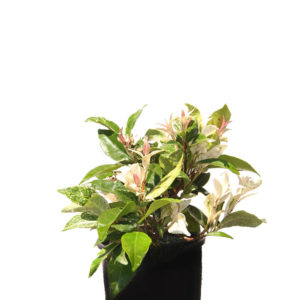
Both plants share the same core characteristics – vigorous growth, evergreen coverage, and suitability for hedging – but trachelospermum tricolour adds a visual layer through its cream, pink, and green leaf tones. This makes it particularly appealing for feature hedges, decorative screening, or areas where aesthetic impact is as important as privacy. Standard trachelospermum is often chosen for large-scale screening projects because of its uniform appearance and faster visual massing. Tricolour varieties grow at a slightly slower pace and benefit from brighter light to maintain colour contrast. Choosing between them depends on whether the priority is pure function or a balance between function and design.
- Trachelospermum: solid green, classic screening look
- Trachelospermum tricolour: variegated, decorative foliage
- Tricolour needs more light for strong colour expression
- Both are evergreen and suitable for hedging
- Choice depends on design vs. coverage priorities
Trachelospermum grows at a moderate pace, typically forming an effective screening hedge within 18 to 36 months.
Growth speed depends on planting conditions, spacing, watering, and maintenance during the establishment phase. In warm seasons, trachelospermum puts on steady growth, especially when supported by a structure such as a fence or trellis. While it may not be the fastest hedge option available, its long-term density and durability make it a preferred choice for sustainable screening. Regular pruning encourages lateral growth, which accelerates hedge thickening rather than excessive vertical extension. Patience during the first year is rewarded with a robust, low-maintenance hedge that continues to improve with age.
- Moderate growth rate compared to fast hedges
- Dense screening usually achieved in 1.5 – 3 years
- Faster results with good soil preparation
- Pruning promotes bushier, thicker coverage
- Long-term reliability outweighs short-term speed
Trachelospermum performs best in well-drained soil with access to light and structural support for consistent year-round coverage.
Choosing the right planting location is essential for achieving a healthy, dense screen. Trachelospermum thrives along fences, walls, pergolas, and boundary lines where it can climb or spread evenly. Good airflow helps reduce disease risk, while drainage prevents root stress. Although adaptable, it benefits from protection against extreme wind during early establishment. In garden beds, spacing should allow airflow while still enabling foliage to knit together over time. Strategic placement ensures both aesthetic harmony and functional screening without overcrowding.
- Ideal along fences, walls, and trellises
- Requires well-drained soil for healthy roots
- Performs well in protected, airy locations
- Suitable for boundary and privacy planting
- Good placement improves long-term density
Trachelospermum tricolour retains its variegation year-round, with colour intensity influenced mainly by light exposure and temperature.
The distinctive cream, green, and pink tones of tricolour foliage are most vibrant when the plant receives ample sunlight, particularly morning or filtered sun. In lower light conditions, leaves may revert to greener tones as the plant prioritises chlorophyll production. Seasonal temperature shifts can also intensify pink hues, especially during cooler months. While colour may fluctuate slightly, healthy plants maintain variegation throughout the year when grown in appropriate conditions and supported by good nutrition and pruning practices.
- Variegation remains year-round with proper care
- Bright light enhances colour contrast
- Cooler temperatures can intensify pink tones
- Shadier conditions reduce variegation
- Balanced nutrition supports leaf colour
Trachelospermum grows best in part sun to full sun, though it tolerates light shade.
Sun exposure plays a major role in growth density and leaf quality. While trachelospermum is adaptable, too much shade can result in sparse growth and slower hedge formation. Full sun promotes stronger branching and thicker foliage, especially important for screening purposes. Tricolour varieties, in particular, benefit from brighter light to maintain their decorative colouring. In hotter regions, protection from harsh afternoon sun can reduce leaf stress while still supporting healthy growth.
- Best performance in part sun to full sun
- Tolerates light shade with slower growth
- Full sun encourages denser hedging
- Tricolour varieties prefer brighter light
- Afternoon sun protection helps in hot areas
Trachelospermum requires regular watering during establishment, followed by reduced watering once roots are established.
In the first 8 – 12 weeks after planting, consistent moisture is critical to help roots anchor into the soil. Watering frequency depends on climate, soil type, and drainage, but soil should remain moist – not waterlogged. Once established, trachelospermum becomes relatively drought-tolerant and only requires supplemental watering during extended dry periods. Overwatering should be avoided, as it can lead to root problems and reduced vigour.
- Frequent watering during establishment phase
- Moist but well-drained soil is ideal
- Reduced watering once roots are established
- Drought-tolerant when mature
- Avoid waterlogged conditions
Regular, light pruning encourages trachelospermum to branch laterally and form a thicker, more effective screen.
Pruning should begin once the plant shows active growth, focusing on trimming tips rather than heavy cuts. This signals the plant to produce side shoots, which increases density. Seasonal pruning helps maintain shape, prevent legginess, and control height. For hedging, trimming two to three times per year is usually sufficient. Avoid severe pruning during extreme heat or cold to reduce stress.
- Light, regular pruning promotes thickness
- Tip pruning encourages lateral branching
- Trim 2–3 times per year for hedges
- Avoid harsh seasonal conditions
- Consistent shaping improves coverage
Trachelospermum is generally low-maintenance, with most issues prevented through good growing conditions and airflow.
Occasional pests such as scale insects or aphids may appear, particularly in stressed plants. Poor drainage can cause root problems, while overcrowding may increase disease risk. Preventative care – such as proper spacing, balanced watering, and periodic inspection – keeps plants healthy. Early intervention with gentle treatments is usually sufficient, avoiding the need for aggressive chemicals.
- Generally resistant to pests and disease
- Scale and aphids may appear occasionally
- Good drainage prevents root issues
- Airflow reduces disease risk
- Early monitoring avoids major problems
Spring Colours offers carefully selected trachelospermum options suited for hedging and screening applications.
When sourcing trachelospermum, quality, plant health, and suitability for local conditions are essential. Spring Colours focuses on robust plants that establish well and perform reliably in Australian landscapes. Their range supports both functional screening needs and decorative planting goals, helping gardeners choose confidently without compromising long-term results. Access to expert guidance ensures correct selection, spacing, and care from the outset.
- Quality-grown plants for strong establishment
- Options suitable for screening and decorative use
- Focus on healthy, resilient stock
- Guidance for successful planting outcomes
- Trusted source for hedging solutions