

Uncategorized
Buy Lavender Plants: How to Choose the Right Lavender for Your Garden
Oct
Lavender is one of those plants that can make a garden feel established almost immediately.
Its silvery foliage, strong fragrance and distinctive flowers work well in everything from cottage gardens and Mediterranean-style planting to modern pots and structured borders. Lavender is also popular because, once established in the right position, many varieties are relatively low maintenance.
But buying lavender successfully starts with more than choosing the prettiest flowering plant.
Different lavender types vary in size, flower shape, fragrance and tolerance of heat or humidity. A plant that performs well in one part of Australia may struggle in another. Drainage also matters enormously, because lavender generally dislikes sitting in wet soil for long periods.
This guide explains what to consider before you buy lavender plants, how French lavender compares with other common types, how to care for lavender after planting, and how Sydney gardeners can shop for lavender and complementary plants through Spring Colours Nursery.
What Should You Know Before You Buy Lavender Plants?
Choose the Right Lavender for Your Climate and Garden Position
The best lavender plant is the one that suits both your climate and the exact position where you intend to grow it.
Lavender generally performs best in:
- full sun
- well-drained soil
- open positions with good airflow
- garden beds or pots that do not remain constantly wet
Poor drainage is one of the biggest reasons lavender plants fail.
Although lavender is often described as drought tolerant, that does not mean a newly planted lavender should be left completely dry. Establishing plants still need regular watering until their root systems develop.
What they usually do not tolerate well is permanently saturated soil.
Before planting, think about:
- how much direct sun the position receives
- whether the soil drains freely
- how humid the site becomes
- whether the plant will grow in a pot or garden bed
- mature height and width
- exposure to wind
- local summer heat
- local winter temperatures
Lavender usually performs best with several hours of direct sunlight each day.
In very humid climates, airflow becomes even more important. Crowded planting can hold moisture around the foliage and increase the risk of poor plant performance.
In pots, drainage holes are essential. Avoid decorative containers that trap water unless the lavender remains in a separate inner pot that can drain properly.
Mature size is also important. Some lavender varieties remain relatively compact, while others can form broad shrubs. Check the expected size before planting along pathways, near entrances or in narrow garden beds.
Once correctly established, lavender is generally easier to care for than many flowering shrubs. The right site makes most of the difference.
French Lavender Plants vs Other Lavender Types: What’s the Difference?
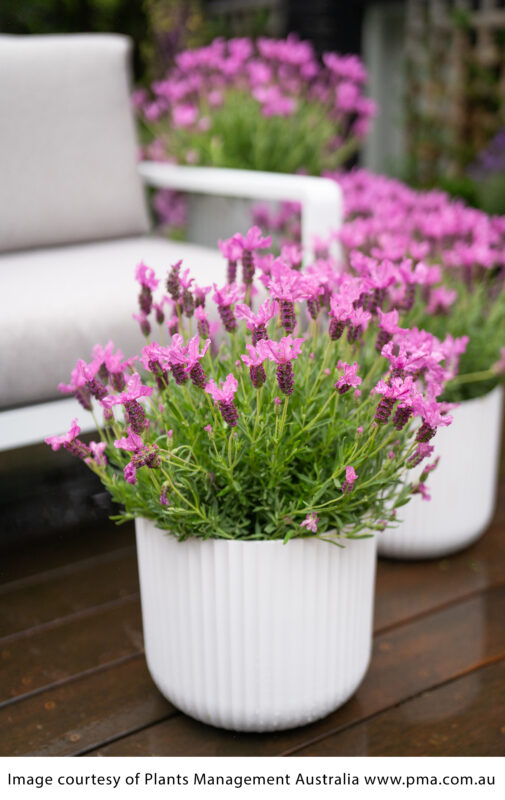
French lavender plants are popular because of their distinctive flowers and strong ornamental value, but “French lavender” can be a confusing name.
Common names vary between countries and nurseries, so always check the botanical name before purchasing.
In Australia, plants sold as French lavender are often forms of Lavandula dentata or sometimes closely related ornamental types. In other markets, the term may be used differently.
French lavender is typically valued for:
- decorative flower heads
- aromatic foliage
- long flowering periods in suitable climates
- strong ornamental impact
- tolerance of warmer conditions
Compared with other lavender types, its appearance can be quite distinctive.
French lavender
- often has toothed or textured foliage
- commonly forms a rounded shrub
- tends to suit warmer climates
- has strong ornamental value
- can flower over an extended period in suitable conditions
English lavender
- is generally associated with strong fragrance
- is commonly used in traditional cottage gardens
- tends to prefer cooler, drier conditions
- is often chosen for culinary or aromatic uses depending on variety
Lavandin or hybrid lavender
- is often more vigorous
- can produce larger plants
- may have long flower stems
- is popular for mass planting and fragrance production
Flower shape also differs between types.
Some ornamental lavenders have prominent bracts above the flower head, creating the familiar “rabbit ear” look. Others form more traditional flower spikes.
If you want lavender primarily for cooking or dried flowers, make sure the variety is appropriate for that use.
If your priority is ornamental flowering, then appearance, size and climate tolerance may matter more than culinary suitability.
For Sydney and many warmer Australian conditions, French-type lavenders can be attractive options, but local humidity and drainage still need to be considered carefully.
What Size Lavender Plant Should You Buy?
The right pot size depends on how quickly you want the garden to look established and how many lavender plants you need.
Smaller lavender plants usually offer the lowest upfront cost.
They are particularly useful when:
- planting long borders
- mass planting
- creating repeated garden patterns
- landscaping larger areas
- working within a fixed budget
Advanced plants cost more, but they create faster impact.
They can be useful for:
- entry gardens
- feature pots
- small courtyards
- established-looking borders
- landscaping where immediate presentation matters
It is important to remember that pot size is not the same as mature plant size.
A small plant may eventually grow just as large as an advanced plant of the same variety. The main difference is how quickly the larger plant creates visual impact.
Spacing should therefore always be based on mature width, not the size of the plant at purchase.
If a lavender is expected to reach 60–80 cm wide, planting it 20 cm from the next plant simply because it currently looks small can result in overcrowding later.
Seasonal appearance also matters.
Lavender purchased outside its main flowering period may look less impressive in the nursery than it will several months later.
Plants may differ in:
- flower quantity
- foliage colour
- overall shape
- height
- fresh growth
That is normal.
When comparing lavender plants for sale, focus on health, variety, mature dimensions and suitability rather than judging quality by the number of flowers on the plant that day.
How to Grow Healthy Lavender Plants After Buying Them
Where Is the Best Place to Plant Lavender?
Lavender performs best in sunny, open positions with free-draining soil.
Good locations include:
- sunny garden beds
- raised beds
- borders
- pathways
- large pots
- Mediterranean-style gardens
- cottage gardens
- pollinator-friendly planting areas
A position receiving several hours of direct sun each day is generally ideal.
Full sun supports:
- compact growth
- strong flowering
- better fragrance
- healthier foliage
- reduced moisture around the plant
Raised beds can be especially useful where existing soil is heavy or slow draining.
If the soil remains wet after rain, improving drainage before planting is important.
Lavender can also work beautifully along pathways and garden borders, where the foliage and flowers can be appreciated at close range.
For a Mediterranean-style garden, lavender pairs naturally with plants that enjoy similar dry, sunny conditions.
These may include:
- rosemary
- thyme
- sage
- drought-tolerant shrubs
- ornamental grasses
- selected succulents
Lavender also works well in cottage-style planting mixed with flowering perennials.
For pots, choose a container with generous drainage holes and avoid leaving water sitting underneath the pot.
The most important principle is simple:
Give lavender sun, airflow and drainage.
Those three conditions matter more than trying to compensate later with extra fertiliser or frequent watering.
How Often Should You Water and Feed Lavender Plants?
Lavender needs more water while establishing than it does once mature.
Immediately after planting, water thoroughly to settle the soil around the root system.
During the first weeks and months, keep an eye on soil moisture and water when needed, particularly during hot or dry weather.
The goal is to encourage the roots to establish without keeping the soil permanently wet.
Once established, many lavender varieties prefer to dry somewhat between watering.
Overwatering can cause more problems than slightly dry conditions.
For garden-grown lavender:
- water regularly after planting
- gradually reduce frequency as the plant establishes
- allow the soil surface to dry between watering where appropriate
- avoid constantly saturated conditions
For lavender in pots:
- check moisture more frequently
- remember that containers dry out faster than garden beds
- ensure water can drain freely
- avoid leaving the pot standing in water
Feeding requirements are generally modest.
Lavender usually does not need heavy fertilising.
Too much nitrogen can encourage soft, leafy growth at the expense of flowers and can result in a less compact plant.
If feeding is required, use an appropriate fertiliser conservatively and follow the product directions.
More fertiliser is not automatically better.
In many cases, good sun and good drainage will contribute more to healthy lavender than frequent feeding.
How Do You Prune Lavender and Keep It Compact?
Regular light pruning helps lavender stay dense, attractive and productive.
Without pruning, many lavender plants gradually become woody and open in the centre.
The easiest approach is to prune lightly and regularly rather than waiting until the plant has become heavily woody.
Useful pruning practices include:
- removing spent flower heads
- lightly shaping plants after flowering
- trimming soft growth
- maintaining a compact rounded form
- removing dead or damaged stems
Avoid cutting heavily into old, leafless woody stems unless the specific lavender variety is known to respond well to that treatment.
Some older woody stems may not reshoot reliably.
The ideal pruning time varies depending on:
- lavender type
- local climate
- flowering period
- frost conditions
In warmer areas, some lavenders may flower repeatedly and can be lightly trimmed several times.
In cooler areas, timing may need to avoid stimulating soft new growth immediately before cold weather.
For many home gardens, a practical approach is:
- Remove spent flowers as needed.
- Lightly trim the plant after its main flowering flush.
- Keep some healthy leafy growth below the cut.
- Avoid leaving pruning until the plant is severely woody.
Consistent light pruning keeps lavender looking much better than infrequent severe pruning.
Buy Lavender Plants From Spring Colours Nursery in Sydney
Find Lavender Plants for Pots, Borders and Garden Beds
For Sydney gardeners searching for lavender plants for sale, Spring Colours offers a broad plant range that can support both individual purchases and larger garden projects.
Lavender can work in many parts of the garden, including:
- front garden borders
- entry areas
- pots
- cottage-style beds
- Mediterranean-style planting
- mixed perennial gardens
- pollinator-friendly areas
- pathway edges
One of lavender’s strengths is its versatility.
A single advanced plant can create a feature in a pot, while multiple smaller plants can be used to create a repeated border or mass-planted effect.
Lavender also combines well with other plants that enjoy similar sunny, well-drained conditions.
For a cohesive planting scheme, consider pairing it with:
- rosemary
- thyme
- sage
- ornamental grasses
- drought-tolerant shrubs
- other Mediterranean-style flowering plants
Because lavender is a seasonal living product, exact varieties and pot sizes can change throughout the year.
Customers looking for a specific type, including French lavender plants, should check current availability before planning around one exact variety.
This is particularly important if you require:
- multiple matching plants
- one specific flower colour
- a particular pot size
- an advanced specimen
- a specific botanical variety
Shop Lavender and Other Mediterranean-Style Plants Online or in Dural
Spring Colours gives Sydney customers the option to browse plants online or visit the physical nursery in Dural.
Online browsing can be useful when you already know what you want.
You can compare:
- plant categories
- available pot sizes
- current prices
- basic growing information
- stock availability
If you are unsure which lavender is right for your garden, visiting the nursery can be more useful.
Seeing plants in person makes it easier to compare:
- foliage colour
- plant shape
- flower colour
- pot size
- advanced versus smaller plants
- complementary species
This can be particularly valuable when designing a border or Mediterranean-style garden.
Spring Colours also offers Sydney plant delivery, which can be helpful when purchasing multiple plants or larger pots.
For bigger projects, combining lavender with shrubs, herbs and other drought-tolerant plants in the same order can simplify delivery and garden planning.
If you are travelling specifically to buy one particular lavender variety, checking availability before visiting is recommended.
Nursery stock changes frequently, especially around peak flowering seasons.
Why Consider Spring Colours When You Want to Buy Lavender Plants?
Spring Colours is an established Sydney nursery based in Dural, offering both online plant shopping and a physical garden centre.
Its broader offering makes it suitable not only for buying lavender plants but also for planning the surrounding garden.
Key advantages include:
- Dural garden centre
- on-site growing yard
- broad indoor and outdoor plant range
- retail supply
- trade supply
- Sydney plant delivery
- larger landscaping orders
- support choosing plants for specific conditions
- ability to enquire about plants not currently listed
That can be useful if lavender is only one part of the project.
For example, you might need lavender for a border but also require:
- screening shrubs
- groundcovers
- feature plants
- pots
- native plants
- succulents
Using one nursery can make it easier to coordinate plant sizes, quantities and delivery.
For larger orders, customers can also enquire about current stock and sourcing options.
The main thing to remember is that lavender availability can change according to variety, season and pot size.
Browse the current Spring Colours plant range online, visit the Dural nursery, or contact the team to check which lavender varieties and pot sizes are currently available.
Where can I buy lavender plants in Sydney?
Lavender plants are commonly available through garden centres, general plant nurseries, specialist nurseries and online plant shops across Sydney.
When comparing places to buy lavender, check:
- exact variety
- botanical name
- pot size
- plant health
- mature size
- current stock
- delivery options
If you need French lavender plants or several matching plants for a larger border, it is worth confirming availability before visiting.
Spring Colours in Dural is one option for Sydney customers looking for lavender alongside a broader range of garden and landscaping plants.
Which lavender plant is best for Australian gardens?
There is no single lavender variety that is best for every Australian garden.
The right choice depends on:
- local climate
- summer heat
- humidity
- winter cold
- soil drainage
- available space
- intended use
French lavender can be a strong ornamental option in many warmer areas, while English lavender generally performs better in cooler, drier conditions.
Hybrid lavenders can be useful where vigorous growth and larger flower displays are preferred.
The best approach is to choose a variety suited to your specific climate and planting position.
Are French lavender plants easy to grow?
French lavender plants are generally relatively easy to grow when they receive enough sun and are planted in well-drained soil.
They perform best where the foliage receives good airflow and the roots are not left constantly wet.
The main risks are usually:
- overwatering
- poor drainage
- insufficient sunlight
- excessive humidity
- overcrowding
Once established in a suitable location, French lavender is generally low maintenance.
Regular light pruning after flowering can help maintain a dense, compact shape.
When is the best time to plant lavender?
Lavender is easiest to establish during mild weather.
For many Australian climates, spring and autumn can both be suitable because the plant has time to establish before extreme heat or cold.
However, the ideal timing depends on local conditions.
In very hot regions, planting immediately before intense summer weather may create additional stress.
In colder areas, planting just before severe frost may also be unsuitable.
Whatever the season, newly planted lavender should receive appropriate establishment watering while still avoiding waterlogged soil.
Can I buy lavender plants online from Spring Colours?
Spring Colours sells plants online and provides Sydney plant delivery, so lavender may be available for online purchase when in stock.
Because lavender varieties, flowering stages and pot sizes can change throughout the season, it is best to check the current online range or contact the nursery if you need a specific variety.
Customers can also visit the Spring Colours nursery in Dural to compare plants in person and browse complementary plants for borders, pots and Mediterranean-style gardens.